Real estate has already learned what happens when the toothpaste gets out of the tube.
Real estate has already learned what happens when the toothpaste gets out of the tube. Katie Smithson brings up that analogy when talking about Zillow, data, and why the industry may not want to repeat the same pattern with AI. Because once the technology moves faster than the rules around it, getting control back becomes a very different problem.
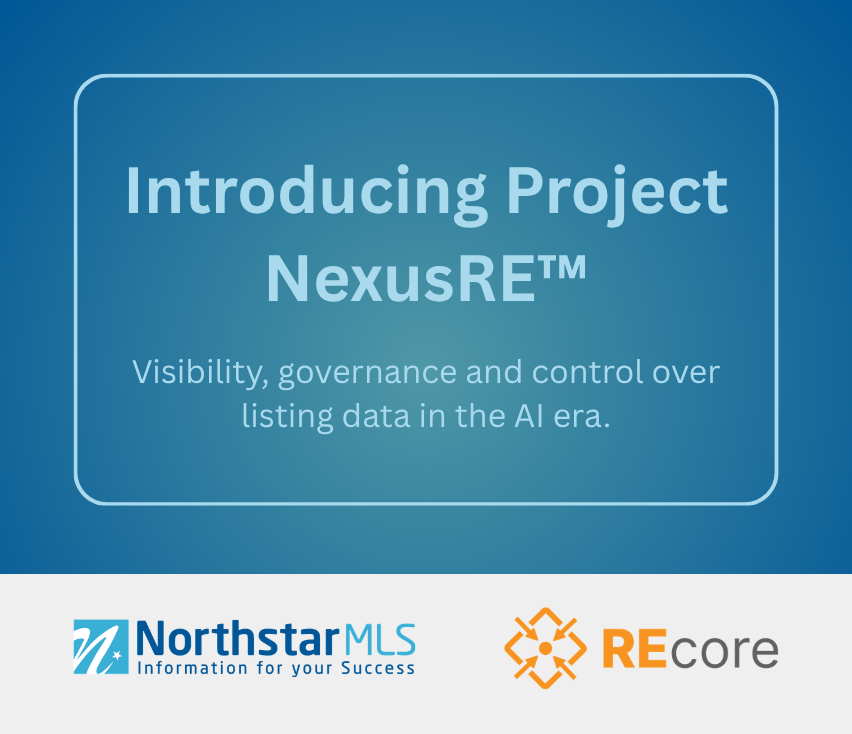
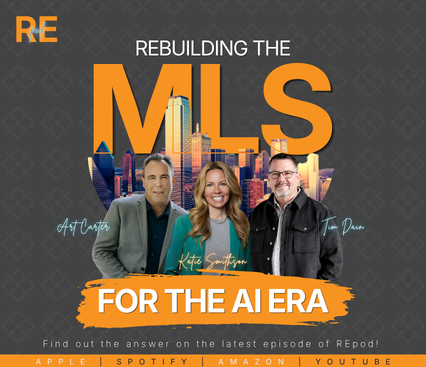
On this episode of REcore, Katie sits down with Art Carter and Tim Dain to talk about Project NexusRE, an effort to rethink the infrastructure behind MLS data before AI starts making those decisions for the industry. It’s not about stopping AI. It’s about building an environment where MLSs, brokers, agents, and vendors actually know the rules of engagement.
One of the wildest moments comes when Art asks Claude how to get CRMLS data. One answer: license it properly. Another: use a Chrome plugin. That’s the problem in a nutshell. When access becomes that easy, protecting the interests of brokers, MLSs, and the people behind the data becomes a much bigger conversation.
So what should an MLS actually be able to control? Can brokers decide where their data goes? Can the industry track individual fields, manage vendor access, reduce replication, and apply rules consistently across AI tools? Project NexusRE is essentially asking how much more visibility and control the industry could have if those capabilities were built into the infrastructure itself.
Here are the key takeaways:
(02:40) Why Project NexusRE Exists
(04:58) AI Agents vs. Human Real Estate Expertise
(07:48) Who Controls MLS Data Once It Leaves?
(10:36) Building One Governance Layer for MLS Data
(15:00) Tracking Every MLS Data Field
(16:39) Rethinking MLS Pricing for Machine-Scale Usage
(18:58) Can Data Replication Finally Be Reduced?
(22:09) Broker Controls NexusRE Wants to Build
(25:36) Could IDX Become More Broker-Directed?
(27:54) Claude Exposes the AI Data Access Problem
(29:54) Why MLS Infrastructure Should Stay Industry-Owned
Tim sums up the bigger idea with one line: “I firmly believe the industry should own that side of the business.” And he’s equally candid about the industry itself: “This industry loves to talk about collaboration, and then it likes to go into its little fiefdoms and do things separately.” This episode asks what might happen if, this time, real estate actually builds the next layer together. Tune in now!
About Tim Dain
Tim Dain is CEO of NorthstarMLS and one of the originators of Project NexusRE. The project grew from a bigger question: if the MLS were rebuilt today, what should change for an AI-driven world? Northstar initially committed $2 million to pursue the idea, which has since expanded into a broader industry effort focused on data governance, broker control, MLS economics, and infrastructure ownership.
Connect with Tim:
LinkedIn
Connect with Angie
About Art Carter
Art Carter is the CEO of California Regional MLS and a founder of REcore. Since 2005, Art has helped lead CRMLS through its growth and has been involved in broader industry conversations around MLS data, infrastructure, and broker needs.
Connect with Art:
About Katie Smithson
Katie Smithson is a long-time veteran of the real estate industry with a history of MLS relationship management and product innovation. In her most recent role, Katie was Chief Revenue Officer for California Regional MLS (CRMLS), directing revenue operations and ensuring proper communication and collaboration between all of CRMLS’s revenue-generating departments. In addition, she has also served as a NAR REACH mentor, board member for the Council of MLS with a CMLX 1 certification, and RESO Board Secretary.
Connect with Katie
Disclaimer
This podcast is for informational purposes only and features opinions, perspectives, and candid discussions about real estate technology and the broader industry. It is not intended as legal, financial, business, or other professional advice. Listeners should consult qualified professionals regarding their specific circumstances.
Listen to Other Streaming Platforms




Episode Transcript
Art Carter 0:00
I sat next to a gentleman yesterday who was discussing some very large venture funds that are flowing into basically AI agents. His organization is making some large bets on the disenfranchisement of real estate agents and brokers.
Katie Smithson 0:14
This is not some proposition that you know real estate is going to be taken over by AI. This is really about facilitating real estate agents and brokers and MLSs in their day-to-day operations.
Tim Dane 0:28
If I got to rebuild the MLS today, I wouldn’t build it the same way we built it originally.
Katie Smithson 0:33
When Zillow came on the scene in 2006, and everybody is just like very excited to give their information. Now that toothpaste is out of the tube. Why do you think the governance piece was so important, yet it seems to be overlooked so far? Welcome to RE Pod, the organized real estate podcast for the industry by the industry. This is where MLS leaders, association executives, and brokers come to rethink operations, simplify complexity, and build systems that actually work together. Join the REcore team as we challenge outdated processes, explore smarter technology, and have honest conversations about the future of real estate. Let’s get into it. Hello, and welcome to another episode of Ari Pod. I am your host Katie Smithson, and today I have two very special guests with me: Art Carter, CEO of REcore and CRMLS, and I think a few other companies that we’re not going to list all of them. And then Tim Dane, CEO of Northstar MLS, and what are you known for? You’re the crazy.
Tim Dane 1:47
I don’t know. Oh, you’re talking about in
Katie Smithson 1:49
the industry. Yeah,
Tim Dane 1:50
yeah. Greg Roberts, mad scientist, I guess. Yeah, the mad scientist.
Katie Smithson 1:55
There we go. All right. So since we have the mad scientist and Art here, I want to take some time and talk about the recent announcement of Project Nexus RE. We’re going to get into as much details as y’all want to discuss today, but I think I just want to start from the beginning, the nexus of this idea. So, I think Tim, if you want to kind of kick it off as how you came up with this idea, why you think it’s important to the industry right now?
Tim Dane 2:29
Yeah, and if I had known or remembered how overused Nexus was, this certainly wouldn’t be called Project Nexus. But you know, we won’t have time to fix it. Yeah, that will not be the eventual name, but you know this all started. It’s interesting how it started because it started as like a sort of a board-approved side hustle journey, right? I I have fun building little companion apps with a couple of partners, at least one of them in the two of them in the industry for Disney, and that took me down a deep rabbit hole years ago as AI started to emerge, probably even before it really hit our industry hard. Right, so I’d wake up every day at five a.m. and spend you know two to three hours watching YouTube videos of crazy people telling me how it’s going to change the world. And one thing led to another. And anyway, those over that time, I think I started to learn some lessons about how it works, and more importantly, what’s behind the LLM, the infrastructure, the data rights, the ownership, all of those things. That dragged us into sort of wrapping it up into our strategic plan, right? So we invited several brokerages, broker members, our board obviously Art was invited because Northstar had just sold some technology to REcore, our ad edit, and our our web API to be specific. So Art came there. We had Rob Hann, Craig Cheatham, David Gumper, Victor Lund. It was a big room of people that you know were either consulting, doing technology, or running brokerages, and we sort of presented this idea of, you know, I think a lot of people have said it from stage, whether they’re brokers, MLS people, or vendors, that if I got to rebuild the MLS today, I wouldn’t build it the same way we we built it originally, right? And from that sort of emerged Nexus RE, like let’s do it. Let’s go rebuild the infrastructure. Over time, that discussion outgrew Northstar. We put up $2 million to chase it. We realized it wasn’t near enough money, so we brought art into the idea a little deeper than just the strat planning. We talked about it a lot. Art sort of bought into the vision and then helped to mold it and shape it in different ways, and we are where we are today, which is raising money for Nexus RE, and I think we’re in alpha testing now, and soon hopefully to be in beta testing, probably within the next couple of months. So it’s becoming reality.
Katie Smithson 4:57
Yeah,
Art Carter 4:58
and I think AI is really. You know, on the minds of the industry right now. You know, part of the process of going out and gaining investment is talking to the large brokers, understanding what their concerns are, seeing what things that they’re targeting within their own platforms. You know, I’ve had the benefit of of attending some a little bit more closely, you know, tied groups discussing what they’re doing with AI, and it is something that you know. One of the things that really resonated with me, and you know, you guys have seen me on with Ed, and you know, saw us argue. One of the things that Ed and I argue back and forth on is the impact of AI. I sat next to a gentleman yesterday who was discussing some very large venture funds that are flowing into basically AI agents, real estate agents, and how you know his organization is making some large bets on the disenfranchisement of real estate agents and brokers, and it’s not something that, and we’re not here to argue this point, but it’s not something that I believe in. I think that brokers and agents, especially when you start talking about the transaction that they shepherd consumers through, it’s something that, and I’m not saying that it’ll never happen, but it’s something that I just don’t see that the human touch doesn’t need to be involved in that. That being said, you know, knowing that we believe that the human touch still needs to be involved, there is a significant problem, especially coming at it from an MLS centric standpoint, of how do you govern what a large language model and you know you can throw out LLMs and MCPs and all these different thought processes that are tied to artificial intelligence, but you know I think the industry’s just still coming to grips with what some of these things mean. But you know I think Tim and I have had some deeper discussions about what should they mean and how should they be handled within an MLS infrastructure.
Katie Smithson 7:02
Yeah, so I think I mean to be clear, this is not some proposition that you know real estate is going to be taken over by AI. This is really about facilitating real estate agents and brokers and MLSs in their day to day operations. So I think art, from your perspective, obviously running an MLS and running a technology company, why did this seem like the the moment to to grasp onto this and to to take this idea that North Star had kind of come up with and say like, yes, we want to help facilitate this, we want to run with it, like what was it in your mind that this just made sense to the timing and everything of moving?
Art Carter 7:48
Yeah one of the things that we’ve done at the REcore level is try to have that industry involved platform that people can feel a little bit more comfortable with. We have so many different, so many different vendors that are involved at different levels, whether they be, you know, VC backed platforms to companies that are multi-billion dollar a year organizations. That the MLS piece of it is such a small part of that. To family-owned businesses, I mean, it’s it’s it’s across the board, and this is not meant to be critical of anybody. And some people have taken it as being critical of them. You know, I think that part of the problem is that everybody is less concerned with where the data is going and how it’s being governed, and they’re just they’re putting a fire hydrant up against a water pipe, and to me, there’s no regulation of or feedback from that water pipe as to where data is going. And so, you know, part of the process of running a multiple listing service is running a cooperative, and making sure that the broker’s data, the broker’s input is being recognized and you know, monetized. If it’s being monetized, that the brokers get that that recognition for what they’re doing, and so this just ties up a lot of those different loose ends in making sure that that this platform does all those things, does the governance piece of it, and does recognize all of the different players’ inputs into the system, and gives them recognition and value for what it is that they’re doing.
Katie Smithson 9:34
Yeah. So Tim, I guess let’s go back to how you kind of came up with this idea. I’m, I’m curious to know. Just obviously, you said you’ve, you have your side hustles. You’re building some tools that are connected to Disney data, which I’m sure was probably not easy the easiest to get access to. I could be wrong about that, and maybe that’s where. This idea of the governance came from. So, I guess what problems did you see with kind of the offerings that we’re seeing out there right now? With just you know, here’s an MCP server, connect to the data, do whatever you want. Why do you think the governance piece was so important? Yet it seems to be overlooked so far. And I mean, maybe it would help too to just kind of like give a better, a clearer explanation as to exactly what Nexus RE is going to accomplish too.
Tim Dane 10:30
Yeah, I’ll I’ll be really quick on the Disney piece because it kind of ties to some of our industry arguments. It’s super interesting. The data is published freely in a wiki, right? Disney, a company that does more to protect its IP than probably any other company on the planet decides to lead with its negative, its most negative data set. Publish it freely. Publish it everywhere. Why? Because they believe in the psychology that if you expect long lines and long waits, you’ll have a better time interacting with Disney. It’s a weird, weird little. I’m sure they put millions into that study, right? So it is fascinating to tie back to that. But the governance side, like, look, I think we, I want to acknowledge something. We’re standing on the shoulders of giants. A lot of people pioneered the foundations of these ideas, right? These weren’t there’s the the new and novel is how we’re combining them and where we’re deciding to push further at, right? So, you know, an API can carry governance in it because you’ve coded that API, but now when you have 234, a few MCP servers that do different things, analytics, search, whatever it is, you’ve got multi channels going out, and those channels individually can each have their own governance set in them, but they don’t collectively all go against one governance set. So over time, drift happens. Over time, you want to change a rule. You have to change it in multiple places, right? Not just one. So centralizing that is one of the themes that we sort of built this around. I think the other realization here, or the other sort of foundation that we’re building on top of, is that if you really look at it from the aspect of governance, isn’t just MLS rules, right? Governance of data is a lot of things. We’ve done a good job at putting MLS rules into like APIs or web feeds, whatever you want to call it. We do a good job of monitoring that. There are no state statutes in that. There is no fair housing in that. I mean, there might be a little bit on, like, say, a data checker where you’re detecting for certain words, but there is a regular update, a regular cadence, a regular monitoring of laws, statutes, things like that. MLS policy changes frequently, and then nobody’s accounted for brokerage policy, right? So why don’t you build one framework that covers all of it, one policy engine that is able to be modified in real time, right? So, if a brokerage comes in to give you an example, a brokerage comes in and says, “I’d like for my brand to be spelled out all the way, and you know the best example might be Berkshire Hathaway Home Services, right? Most people will type BHHS. What if one of the brokerage offices wants it all typed out plus their thing in every piece of marketing content their agent creates? They have to do that verbally right now. In Nexus, they could set up that brokerage rule, and anytime we generate use generative AI on top of that, or an agent uses it to create marketing, it applies it correctly across the whole spectrum, right? So that’s what we’re after: is one engine to drive every medium, I guess, in which data leaves or enters the MLS.
Katie Smithson 13:55
Yeah, and I love that example too. Like the branding, like that. That’s such a great example because for me, you know, anytime I’m using like chat or cloud or anything, and like I want to, you know, at Recore we make these fun little backgrounds for Zoom and everything, and every time it messes up the Recore logo. So I think that’s a good example of being able to have that consistency, just from a branding perspective, and then you take that on a larger scale to what that kind of consistency can mean for the actual listing data and how that carries over to display on different sites and so forth. So I think that was just pretty, just a really good like hit home for me, so I guess in addition to the governance piece, like, why has this been something that you think is really resonating when y’all are out talking to MLSs? Why is this so exciting to everybody that you’ve been talking to about Project Nexus RE?
Tim Dane 15:00
I think a lot of it has to do with the arguments that have emerged since the idea was originated, right? Like we didn’t do this to solve arguments of the day, but a lot of the arguments of the day, we take another step towards the solutions, right? So by doing things like truly exposing where every single piece of data, not a listing, but like the actual field. Where did it go? How did it get there? Who authorized it to be there? Under what terms is it displayed there? And can I affect those terms? Are all questions that not only can the MLS start to gain visibility into, but they can also pass controls down to brokers or agents, like depending on how that MLS operates and how its market operates and how its relationship with brokers operate, it’s scalable to a level that’s just different than what we have today. Some places have some of those pieces, but I don’t think any of them are offering up that level of visibility and control. I could be wrong. I guess somebody could prove me wrong, but I think that’s one of the things people find exciting. The other one is our
Katie Smithson 16:06
quick timeout. If you’re ready to put AI to work for your staff and your membership, it’s time to check out Navigator. Recore is the exclusive reseller of Navigator by Lindy. Head to recore.net/navigator to learn more. All right, back to the show.
Tim Dane 16:23
Our discussion and our work, which I might let Art comment on this because I just sent him a 16-page advanced mathematics document on the economics of, you know real estate data movement, and it’s fascinating. Sounds like
Katie Smithson 16:37
a very exciting read. I’m sorry,
Tim Dane 16:39
but it’s fascinating to me that we have a subscription model still, right? That charges everyone. I’m making this up. 50 bucks a month. Most of those people hit our services at keyboard and mouse scale. A select few hit it at machine scale, and we charge those select few the same amount we charge for an agent at keyboard and mouse for vastly different resource consumption, so we talk about things that you know Art can maybe expand on like value contribution modalities, right? What is the value of the input, and how do we how do we restructure the incentive side of the MLS to reward that value, and then how do we set an extraction fee that is equal for everyone? Because everyone extracts value. Some are going to extract more faster, but they’ll pay the same freight load on a per field that anybody that extracts at a keyboard and mouse scale. So, balancing that out and recognizing that almost everyone that touches the MLS system can or does contribute value to it, right? So how do you rank the different value contributions, and how do you incentivize that so that you can protect the commons, essentially, right?
Katie Smithson 17:55
Yeah,
Art Carter 17:55
yeah, yeah. Protect the cooperative. You know, Tim. Tim basically brought up the the fact that you know there is a there’s a disconnect in between the values being provided into the cooperative and those being taken out of the the cooperative. Don’t want to scare anybody, but you know there are obviously significant values that that the portals bring to the table. There’s significant values that brokerages that are producing listing data are bringing to the table. There are significant values that buyers agents are bringing to the cooperative, and that’s part of the process. That you know, the reason why the document is so big and so unwieldy in in trying to figure out the economics of all this stuff is because you’ve got those are the rabbit holes you’ve got to dive down, and you know we’re in the process of doing that, a process of getting ready for shadow metering to understand all of the traffic that’s going in and out of our systems, better understanding that, and better understanding like what Tim said, the the value chain of all those different contributions.
Tim Dane 18:58
Yeah, I think too the the tracking is important because it’s going to give us a hold on on things that MLSs have never really considered part of their pricing. Maybe they have, but they haven’t thought about it. So those that sell data feeds, for example, like you know it’s $1,000 a year to get an IDX feed. Maybe the the passing thought is in there is that it it costs us money to generate that compute right to fulfill the requests, but nobody’s ever actually metered the compute or tried to put value to the compute. And if you can do that and do it effectively, and you know it really well, I think we can take a lot of steps towards ending replication. At least for the majority of data that gets fed out to the wide world, there are going to be those companies that it’s just much harder for us to end replication because serving compute at Forest Realty, who gets you know 20 website visitors a week, is a lot different than serving the compute at Zillow, right? There’s a just just vastly different resources required. So, but if it. Reduces it enough that we, and this is probably Art’s line more than mine. If it reduces enough that we can then look at the feeds that we allow replication, put better contractual restraints around that, and actively monitor those, I think that’s more effective than a blanket agreement for every single feed we have going out, right?
Art Carter 20:21
Yeah, and and you know, I I in 2011 I brought this up at the the reso level of how do we kill replication, and I was not met with a lot of applause by a lot of people, primarily because the the complexities of of bringing it to that enterprise level are are pretty significant, but you know the the long chain is where you know an RE distributed you know is a perfect you know perfect mirror of what they’re seeing out in the marketplace. Most of that gray data that we’re seeing out in the marketplace comes from the long chain. I don’t worry about Zillow. I don’t worry about Homes. I don’t worry about you know Redfin. They’re not selling data out the back end. It’s the mom and pops, you know, IDX shop that’s got you know 250 websites that they sell against. They’re the ones that you know typically that we see some of that leakage from. So you know, I I would like to get to the point of being able to end replication for for that,
Tim Dane 21:22
yeah, and you know, Martin and I have talked a lot about this too. The MLS ending replication or primarily defaulting to non-replication agreements also opens the door that we’re considering of well, what if we allow the broker for their own data to say, you know what, I override the MLS for my data and I allow replication over here, and that may be because you know when we can have a
Art Carter 21:45
relationship.
Tim Dane 21:46
Yeah, not only relationship, but also when we do a non-replication feed, that’s relying upon our ability to serve that compute. And maybe maybe that vendor is underperforming in speed or something, and they want to speed it up so they allow replication, something along those lines, right? So, again, it’s and is that something that
Katie Smithson 22:04
a broker would be able to do through Nexus RE, or they have to have okay?
Tim Dane 22:09
No, through through Nexus RE, we’re building out true visibility brokerage tools, broker controls on a lot of different things that they don’t have today.
Katie Smithson 22:20
Okay, so as far as like, just to dig in a little bit deeper on the controls, and I know this isn’t fully fleshed out, but I think just talk a little bit more about like what the different layers, I guess. So like as an MLS, what controls does the MLS have? What does the broker have? What does an individual agent have access to, or conceptually, what is your what is the vision of what what that all looks like?
Tim Dane 22:49
I think some of it is certainly TBD. To acknowledge your your opening statement, right? I mean, we’re in alpha right now. We have to get through shadow metering. We we have our our thoughts on what those controls are and what they mean, you know. One default is whoever licenses a platform gets to decide where they pass which entitlements, right? So we we build this out with entitlements and tie that to role based access. Role based access, something the industry understands now. We call them participants, subscribers, appraiser members, whatever. Pairing that with entitlements allows us to sort of get rid of that old nomenclature and just say we have users and users have entitlements, and different people in the system can grant different entitlements. The MLS can obviously grant the entitlement of MLS data feeds. The brokerage should be able to grant the entitlements of the brokerage data feeds. They should be able to provision their own vendors on the system, you know they have a vendor relationship. They add an API. They’re paying whatever the freight is. I don’t know. I’m making it up for Canva. They should be able to plug Canva in and you know rate limit that. So I think that’s the the that’s about as deep as I want to go. Just because it is an alpha, and who knows where it’ll end up, like with what we’re able to accomplish? But our goal is is infinite scalability and infinite visibility, because I think the visibility is what drives the conversations between the brokers, the MLSs, the vendors, the portals, to say once I truly know what’s happening, I can have a better debate or a better argument, or make a better case for why it should or should not be that way. I’ll add another.
Art Carter 24:26
I’ll add another ability in there, which is flexibility, and part of the the rub with the brokerage, especially the large brokerage community now, is that they do want to have that flexibility to dictate some of their data loads, the feeds, the locations that their their data is showing up on. At the end of the day, you know, I’m I think not I won’t speak for Tim, but I I think he’ll he’ll echo this comment that the MLS at the end of the day is a cooperative, and we’ve got to make sure that we maintain that cooperative, but. Give the brokerages that want it, and who knows? It may be 25% of the listings, 50% of the listings. Actually, the brokers intercede on. You know, we don’t we don’t know what we don’t know right now, but the ability to intercede, I think, is going to be one of those key elements for maintaining the cooperative and maintaining the The completeness of the marketplace in which we all serve.
Tim Dane 25:24
Yeah, I’d say the the one benefit to the legal actions of right now, if there is a benefit, I hate to even say there’s a benefit, is that we gotta always find the
Katie Smithson 25:34
silver lining. So
Tim Dane 25:35
building, we get to sit back and sort of wait out what really happens from a legal perspective, right? Like, and I’m totally making this up, but let’s say at the end of the day, anything that is classified as public record is required to be in an IDX feed. Well, we already have past court rulings that say things like bedrooms, bathrooms, square feet are all part of public record. So, what if an IDX feed, a base MLS negotiated one, starts at public record, says what are the fields I have to add to that to make it a usable IDX feed, and then everything else below that is broker choice on including or not including. Like that’s just one of many examples, but my point there is that we do have a benefit of being able to wait out and see where all the legal rumblings and industry debate gets decided at before we lock in how the system will work from that aspect.
Katie Smithson 26:26
Yeah, but I think the important thing to just-I mean, as far like yes, we can wait out the the legal decisions and those kinds of things, but like the timing now to get things done with the the speed that AI is taking over, I think, all of our lives. Like this was a very important thing to start to try and tackle at this point, because I think we were actually we were meeting with an MLS in in DC, and one of the brokers that was in the meeting kind of likened it to, you know, when Zillow came on the scene in 2006, and everybody is just like very excited to give their information, give the data to Zillow, and you know, now that toothpaste is out of the out of the tube. You’re not getting that back in. So I feel like where we are with AI right now, it’s a little bit of a similar scenario where, you know we have to be, we need to be prepared for AI to interact responsibly with MLS data and property data in general. So I guess just to kind of wrap up the conversation, for both of you can weigh in on this. But I just curious, why was this an industry initiative? Like, why did you feel like Northstar Recore was the group to solve this problem? Why not take it to like a bigger company or larger technology? One
Art Carter 27:54
of the things that really resonated with me is, and I was just at this industry event this week, and I asked this question around the table because one of the things that Tim and I talk about is the personal era of or the the era of personal software development. One of the speakers came up with this term that I love, which is called citizen developers. And basically, within a lot of companies now, people who have no programming experience, who have no programming responsibilities, are now building software that are used within their platforms, and I think that that is the future. Even in real estate, the problem is that you know my biggest concern. You know I I went and asked Claude. You know, just this open-ended question. I said, Claude, I’m building this project for CRMLS. How do I get CRMLS data? And Claude came back with, you know, I’ve got two answers for you. Either you can go license the data directly from CRMLS, or I’ve got this really cool Chrome plugin that all you need to do is log into your front end, and I’ll get all the data that you need. The problem is, is that in an unregulated, unwalled garden, Claude now has access to all of this data in a way that there’s no protections for the underlying IP holders, and that needs to be protected. And to have 50 different elements protecting that data in 50 different ways is probably not in the brokerage’s best interest. I know that this is coming from somebody who’s invested in this process with Nexus RE. I truly believe that that singular point of enterprise-level software that allows the brokerages and the MLSs to work together to help protect their data as it goes into these large language models is the best way and the most efficient way for us doing this.
Tim Dane 29:54
Yeah, and I’ll frame my response just a little differently. When Northstar decided to approach REcore, it was a realization that it’s going to cost us far more to build the full vision than we initially anticipated. We are Northstar is not interested in developing software primarily because of something you alluded to but didn’t say, which is VC companies now don’t really value SaaS that well. They value the infrastructure that the SaaS runs on, and when I boil it down to infrastructure, that’s a loaded term. But what I’m essentially talking about is the identity provider, the database, and the governance model. To me, that’s infrastructure, and it’s not that others can’t build it. We know that there are competing projects out there that are trying to raise funds and trying to do something similar, right? We went after patents to build our first moat. We’re going after investments and support to build the second moat because we firmly believe, and the reason we picked REC to advance this is they are the only company that are building solutions not named BPP, which you know, but that can be owned by MLSs and brokers. I don’t think BPP has an interest in doing this. MLSs are their customers, but for us, it’s. I firmly believe the industry should own that side of the business. I’m not saying, look, I want every vendor. We have a roadmap that includes reaching out to all of our vendors and saying how can you contribute to this? How can you make it better? How can we continue our partnerships that we’ve had over years? Those are all going to be important conversations, but I do think that the infrastructure should be owned by MLSs and brokers because they are the their motivating factor. I think supports what the MLS has always been, and what I hope it can continue to be, which is sort of the intersection of trust and neutrality for the industry. Right? Anybody else probably has a profit motive above those two motives, and I’m not saying profit’s bad. It’s just not our primary motive, right? So,
Art Carter 31:57
or or alternatively, alternatively, an exit strategy that may bring them into conflict with the industry in and of itself.
Tim Dane 32:08
Yeah, so that’s the main reason we decided to expand it. That and you know, along the way, we realized this isn’t just beneficial to Northstar. This can be beneficial to a lot of our friends, and this industry loves to talk about collaboration, and then it likes to go into its little fiefdoms and do things separately. But I’m truly trying to support that collaboration side with a go-to-market strategy that I think makes sense from a brokerage and MLS strategy standpoint.
Katie Smithson 32:39
Well, and on that note, you did allude to this earlier in the podcast. But if anyone wants to talk more about Project Nexus RE, obviously they can get in touch with either one of you. We can put your email addresses in the show notes. But you are currently out talking to MLSs and brokers about investment opportunities in this project. It’s a way to get ownership into what this can be, and I think to the point that y’all have made, this is something that we’re doing to make the industry better, provide better access and tools to agents and brokers alike, and to the MLSs, and to protecting the data. So, thank you so much for your time and for talking with me today more about this project. I’m excited to see how it continues to progress. All right, awesome. Well, thanks again. Yeah, we’ll have your contact information in the show notes if anybody wants to hear more.
Tim Dane 33:39
Thanks.
Art Carter 33:40
Thank
Katie Smithson 33:40
you. That wraps up this episode of REpod. If this conversation made you think differently, don’t keep it to yourself. Subscribe, share with your network, and sign up for our newsletter to stay in the conversation. The future of organized real estate gets better when leaders engage.