RealReports has been digging into one of the biggest questions in real estate – what actually happens when a home is listed off the MLS instead of on it?
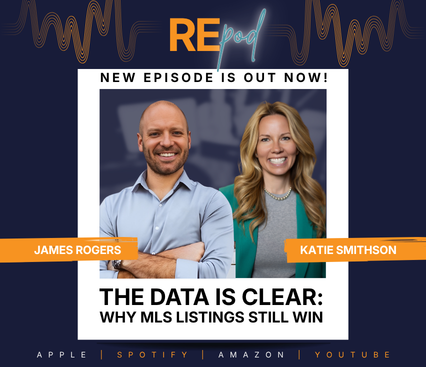
Katie Smithson brings James Rogers into the conversation to talk through the research, where it started, and why the numbers are getting attention.
James explains that the work began with MLS partners who wanted a data-driven answer instead of another industry argument. He gets into how the study was built, why they started with public record data, and how they cleaned out transactions that were never meant for the open market in the first place.
The conversation keeps coming back to the seller. In one market they looked at, homes listed on the MLS sold a little over 13% higher than those sold off MLS, which came out to about $51,000 more per transaction.
Katie also brings in the broader market picture, from San Francisco to North Carolina, where similar patterns started showing up again. James does not just talk about money left on the table. He also gets into the bigger tension underneath all of it. “I’ve personally yet to see an actual study proving the opposite.”
Here are the key takeaways:
(2:55) Why RealReports took on the private listings debate
(8:00) Why MLS exposure needs real data behind it
(9:17) Letting data shape the market conversation
(11:29) Looking past outliers to see the real pattern
(13:54) The $51,000 question for sellers
(15:31) From one transaction to $406 million left behind
(19:06) Turning local findings into a national message
(21:04) Getting MLS data in front of consumers
(23:11) The RealReports approach: listen first
Consumer value, brokerage incentive, and national scale all start to come into view by the end of this episode. Tune in for a conversation about listings, data, and who really benefits when exposure gets smaller.
About James Rogers
James Rogers is the CEO and co-founder of RealReports. He works with MLS partners on real estate data and market analysis. His work focuses on helping the industry use data to answer important questions around listings, seller value, and consumer impact.
Connect with James
LinkedIn
About Katie Smithson
Katie Smithson is serving as CRO of REcore and is a long-time veteran of the real estate industry with a history of MLS relationship management and product innovation. In her most recent role, Katie was Chief Revenue Officer for California Regional MLS (CRMLS), directing revenue operations and ensuring proper communication and collaboration between all of CRMLS’s revenue-generating departments. In addition, she has also served as a NAR REACH mentor, board member for the Council of MLS with a CMLX 1 certification, and RESO Board Secretary.
Listen to Other Streaming Platforms




Episode Transcript
Katie Smithson 00:00
A recent analysis in one MLS market showed that sellers left $406 million on the table in a single year by listing off of the MLS.
James Rogers 00:11
So if you think about what this impact is at a national scale, so we’re looking at billions and billions of dollars in impact that the end of the day, is money that’s taken out of sellers pockets.
Katie Smithson 00:21
How do we get the word out? Because it’s not just about to me, it’s we have to reach brokers and agents to make them understand the importance of listing on the MLS, but more importantly, getting the word out to consumers. Welcome to REpod — the organized real estate podcast, for the industry, by the industry. This is where MLS leaders, association executives, and brokers come to rethink operations, simplify complexity, and build systems that actually work together. Join the REcore team as we challenge outdated processes, explore smarter technology, and have honest conversations about the future of real estate. Let’s get into it. Welcome to another episode of REpod with your host. Katie Smithson. I’m excited about our conversation today. This is one that I personally feel very I have a lot of emotions about it, but we want to get beyond the emotions and look at the facts. So there’s a growing narrative in the real estate industry right now that hiding listings on private networks is a better a better solution for sellers. But I think there’s part of our conversation today is about the new data that is telling a bit of a different story. A recent analysis in one MLS market showed that sellers left $406 million on the table in a single year by listing off of the MLS so I want to dive into that study and a little bit more today with our guest, James Rogers, CEO and co-founder of Real reports, James, thank you for being here today.
James Rogers 02:07
Hey, Katie, thanks for having me.
Katie Smithson 02:08
So like I said, I’m really excited to have this conversation. I saw a presentation that you all did at Riso. I think it was back in the fall. It all runs together for me, honestly, but I thought it was I really want to just bring this more to the forefront. Obviously, I think you got some attraction when you presented it Riso, but I also think that it’s kind of taken a backseat to a lot of the news that’s been out lately about private listing networks. So just want to dive into a little bit more about why real reports took on the, I guess, took on this task of doing the study, and maybe just talk a little bit more about your results and how that all came about.
James Rogers 02:55
Sure. Well, thanks, Katie, I, like you, have a lot of thoughts on this, so I’ll try and be as concise as I can. But to give you a bit of background, our company partners with a lot of MLSs, and we were approached last, I think, last summer by, as you mentioned, the San Francisco Association realtors and our friends there asked us if, if we could collaborate on something, then it was not the general issue was not news to us. I think it’d be hard. You’d have to be living under a rock if you were in this industry and and not have noticed this sort of debate around private listing networks. But the folks over there, our friends, asked us if we could collaborate and do an analysis. Because not our core, we’re a data company. So they said, Look, we like, like working with you. You have a lot of data. We’d love to answer this question of, what is the actual impact of when you list a home on or off the MLS? Because I think, you know, I think what’s important was, certainly was important to them, and is important to them, and is important to me, is that this gets beyond the emotion of it. Because I think, you know, a lot of this fight happens, whether it’s on stage or on LinkedIn or in the media. I think a lot of what’s happening is it’s very emotional, and it’s hard to argue in that realm and not be biased by what might influence your own side of the argument. So I think it was really important to them, and again, to me, to dig in at a level of, what does the actual data say, going way back, I’m a student of economics and finance, so the numbers were really important to me, so I wanted to, when they approached us with this opportunity, we said, of course, we’d love to help. And so that, that’s what really began this effort, was just their sort of, their inquiry and then exploration really just at a research level with them. You know, you shared a little bit of the results. It’s now gone, start beginning to blow up a bit beyond that. We’ve got a lot more plans for it now, but, but that was really the genesis. It was last summer. And then, like you said, we presented their findings just for the San Francisco market last fall. And I think one thing that was really important to us, not just was being rigorous about the data, but being comfortable sharing whatever the conclusion were. I mean, I think that, because this is so emotional and I can can be biased, it was important to us to say, look, we might think that, again, I’ve got an economics background. So for me, it seems like basic economics that when you want to sell some. For the best price, you should market it as widely as possible, not just in real estate, in any product category, right? But it was really important to us to say we’re going to share this no matter what the result is. It just so happened that, like you shared the result kind of lined up with what we thought might happen, but we were comfortable and prepared to share it regardless,
Katie Smithson 05:18
yeah, which I think is a really important fact, and I love that. That’s how you you framed it when you did present at Riso, is that regardless of what the results showed, you were going to come out and and show those results. And I think that’s a really important piece of the story, is that it was you really went in with an open mind. You were open to finding what, what the data was really going to show. So I mean, again, just going back to the emotional piece of it, do you think that people in the industry are debating this based on the real data, or is it, you know, based on anecdotes and emotion and the feeling of of what they think is right?
James Rogers 06:01
Well, I suppose I’m a little biased on this one, just because we’re helping people argue it with data. But you know, I think I’m personally yet to see an actual study proving the opposite, showing that it is actually advantageous, in a financial perspective, to a seller to list the private network. And it doesn’t mean it doesn’t exist. I just haven’t seen it. Obviously, I spent some time thinking about this issue because it’s something that we’re helping folks work on. Folks work on. So I’m yet to see it. So the entirety of what I’ve seen arguing for private listing networks, you may, may or may not use the word emotional, but I certainly think it’s biased. It’s in, you know, I think it’s generally anecdotal. And the end of the day, it’s hard for me to see a see a path to why that argument stands other than shareholder value, and it be that, whichever argument, whichever part of it, it may be, but whether it’s recruiting, obviously that’s good for shareholder and I don’t just mean a public company. I mean, if you’re anybody, I’ve run a brokerage before, so again, yeah, obviously, especially, you know, post covid recruiting real estate agents is one of the hardest things in that industry. I don’t envy brokers that have to do that,
Katie Smithson 07:02
right? But
James Rogers 07:02
I think that a huge part of private listing networks is, of course, the recruiting angle. I think it’s either there is a part of it that I think obviously, if you’re a brokerage and you represent both sides of a deal, then you’re going to make more money. That may be a small fraction of what’s actually happening, but I don’t think anybody’s upset as a brokerage when that does happen. So it’s just hard for me to see an angle that isn’t representative of shareholder value, rather than something that’s actually representative consumer value. And I just happen to really be passionate about making sure that the consumer ends up being protected, especially we all love to toss around figures in this industry, but I think for almost anybody that ever transacts on a home, it’s the biggest decision they ever make from a financial perspective. So any impact is going to be meaning for them. And if this is harder in equity that somebody spent years and working toward to then give up any of it is meaningful, but then to give up the numbers that we’re seeing in our studies is almost shameful. And so I’d love to see an analysis in the analysis proving us wrong, but I’ve yet to
Katie Smithson 07:59
Yeah, yeah, yeah. And I think I do want to take the other side too, because I think the other side of the argument about putting listings on the MLS, I think a lot of what you see out there has been more of an emotional approach, and that’s why I think what you are doing. And I mean, I think there are other MLSs who are maybe not necessarily working with real reports, but but doing their own kind of analysis to to prove out and have the actual data to back up the argument that it is better for consumers to have as much exposure as possible, and oftentimes that means putting the listing in the MLS. So moving beyond the opinions and everything else. Let’s talk. I don’t know how much you can share, just you know openly about because I know this is part of your offering as a company is to do these types of studies. But I guess just like, high level, what was the methodology behind your study that you’ve done in the markets so far? Like, what has helped, really, as far as, like, getting access to the data, analyzing it from a perspective that it’s, you know, not swayed one way or the other, I guess, just some of those things that you can talk about, about the methodology behind the studies that you’ve done,
James Rogers 09:17
of course, and Katie, I’ll answer that. But first, I just want to address one part that you said, and it’s, of course, what we’ve put together. We happen to call it sightline at this point, but it, you know, that’s by no means the only approach to this. And like you said, some great, thoughtful MLS leaders are pursuing similar strategies. I think the important part is that it’s a rigorous, data driven analysis. It doesn’t matter whether it’s done by real reports or by another company or by a consultant. I think the important part is that, as an industry, you know, one of the ways I’ve really thought about this is, I think there are folks that are trying to define what this market should look like, and I think that MLS is and and folks that can really be data driven have the opportunity to define this market in a real data driven way. So just to touch on that, I mean, I think there I have seen a lot of other great efforts that are on. Going. But to touch on our methodology, like I said, it was really important to be vigorous so it’s not just so one of the ways we think about broadly looking at all transactions that starting with the public record data, something is recorded, we can generally agree, okay, that transacted, and unless you’re in a non disclosure state, we can agree that it transacted for a certain price. There might be some variability or some error in that data, but I think we can all accept that that’s generally going that’s generally going to be correct. So we start there. And that’s the baseline. Say, what did transact? Because, you know, possible that MLS data doesn’t match up perfectly with that, but that’s where we start. And then we did a lot of work to exclude things that nobody would really expect to be sold publicly. And if I’m if I’m transacting, if I’m transacting by transferring a deed that I own into an LLC, that’s not something I would publicly market, of course, because it’s just really me. It’s not, not we call an arm’s length transaction. Or if I, you know, maybe it’s inter intra family. It’s just to my sibling, or I’ve inherited a property no one, no one would reasonably expect any of those
Katie Smithson 11:00
to
James Rogers 11:00
be included in an ML as an MLS listing. So we did a lot of work, sort of scrub the data, clean it, and figure out what just kind of generally, by some sort of consensus, nobody would expect it to be marketed that way. So once we did that, and obviously it narrows it down even more, and then we do the analysis based on that general subset. And then at the product level, I think one of the things we got a lot of feedback on from MLS is, is, and I think this is totally valid when you’re thinking about an analysis, and whether through us or someone else, is that you need to be able to slice it, because what we’ve seen in almost every market is, and probably anybody who knows real estate could agree that this is broadly true. They’re always gonna be outliers. You’re gonna get that odd $40 million property that
Katie Smithson 11:38
price
James Rogers 11:39
is very unlike almost anything else in its market. But if you wait on that, you’re gonna end up overweight toward an odd conclusion. So that’s the other thing. We empower through our product version of this and MLS to do various types of slicing. Because I’ve also seen other folks talk about, well, you know, a lot of times, if you have a mobile home, for example, that might get sold off market in a sort of private transaction, we allow folks to actually look at it and say, look at just these price tranches, or just these counties, or just these property types. Because I think it’s important to look at the conclusion more broadly but also more granularly, to say, Did this hold up when you sliced it various ways? And what we’re seeing it does, it does stand regardless of those tranches. But I think it’s important to be able to look at it in a more granular
Katie Smithson 12:21
way. Yeah. I was just going to ask if it did, you know, does it follow the trend when you do get that that granular, which is interesting to hear. And I think, you know, another great fact to keep in mind, that this is, this is something that you can, you know, you can look at it from a broad view, or you can drill down, and again, it sounds like the pattern is kind of lining up. So speaking of patterns, again, San Francisco is not the only market where you have done this study. You’ve also worked with dorify, MLS, correct?
James Rogers 12:54
That’s right.
Katie Smithson 12:54
So I guess again, just to kind of get into a little bit of the numbers I know at the opening, I talked about the variance in monies left on the table. Let’s talk specifically more about Dora fi so you analyze nearly 28,000 transaction across the dorify MLS market. And just for our listeners out there who might not be familiar, can you talk broadly like, what areas does Storify cover? I know personally, like the Raleigh area, but I didn’t know how broad you all went. So quick time out. If you’re ready to put AI to work for your staff and your membership, it’s time to check out navigator. REcore is the exclusive reseller of navigator by Lindy head to recore.net, forward, slash navigator to learn more. All right, back to the show
James Rogers 13:46
generally. Think about them for the Research Triangle of North Carolina. So yeah, that’s more or less exactly what you just said that in its neighboring cities.
Katie Smithson 13:54
Got it. Okay. So again, the The results showed pretty similar trends. Homes listed on the MLS sold a little over 13% higher than those off the MLS, coming out to around $51,000 more per transaction. That’s not a small amount of money. And to me, I just I see these numbers, and I think of it from a seller perspective, I have bought and sold many properties over my lifetime, and I can’t imagine leaving that much money on the table. So I think the other thing, I guess, from your perspective, when you looked at these markets side by side, because those are very differing markets. When you look at San Francisco versus North Carolina, did you expect the results to line up this clearly? I
James Rogers 14:50
think we went into it with an open mind. I think, like I said before, I mean, I’ve lived in San Francisco. It is an odd market in a lot of ways. I don’t just mean i In this case, I mostly just mean that. Real Estate, I guess it’s odd, yeah, mostly referring to its real estate market. It’s just an unusual I would call it a unique market. I think there are a lot of things that happen there that don’t necessarily happen elsewhere. So we were, of course, curious to see if it would hold. But again, I think it’s important for us to be rigorous. So we tried to go into it saying, I mean, I think while we might have liked for a certain result, we tried to just go into it an unbiased and rigorous way to say we’re to do a similar analysis here, and the results will speak for themselves. And it just so happened that they did. I mean, to me, the even more interesting number than necessarily thinking about one transaction where somebody might have left $51,000 on the table is that writ large, as a market, that means that means that people left $406 million on the table. That’s a lot of money in just one part of North Carolina. So if you think about what this impact is at a national scale, I mean, this was hundreds of millions dollars in San Francisco, and then it was hundreds of millions of dollars in the research driving with North Carolina. And not to get ahead of myself, we’ve done this analysis, and it’s not public yet, but in some other parts of the country, and the results held there too. And so we’re looking at billions and billions of dollars in impact that the end of the day, is money that’s taken out of seller’s pockets. It’s money that they’re being told that for whatever series of reasons they should list a certain way when they sell their home, not on the public market, to achieve what I think is the best price discovery, and then thereby the best value. They’re ultimately leaving billions of dollars on the table. And that’s I mean, for folks who, again, this is their largest asset, like you said, I can’t imagine it either. I can’t imagine 13% 18% that’s a really big difference to people, yeah, where this is their most meaningful financial asset?
Katie Smithson 16:36
Absolutely, yeah. And I guess you know, knowing that this data is is now available. Like you said, you’re you’re continuing this research. There are others doing this research. How do we get the word out? Because it’s not just about, to me, it’s we have to reach brokers and agents to make them understand the importance of listing on the MLS, but more importantly, getting the word out to consumers. And I think that’s something that, just as a whole, the the organized real estate industry in the in the United States has not, I don’t, I don’t think they’ve done a great job of, like, really explaining the value of the MLS. I remember few years ago, when I was on the board of cmls, there was a campaign that was created called in the know, and it was derived, or it was is designed to help educate consumers. But I mean, due to lack of funds like advertising to reach consumers can be expensive, so I guess just, do you have any thoughts on, like, what? What is the best way to get this message out and to make people aware and to just educate them on the value of putting it on the MLS?
James Rogers 17:52
Yeah, okay. I think it’s a great question. I think one of the kind of exciting things about this, well, I think there’s a lot of people share a lot of anxiety around this is kind of why I might call uncertainty in the market. I think it’s also an opportunity for people to collaborate in in a really neat way. Of course, you talk about cmls and we’re both involved with other organizations where there is a lot of great collaborations industry, but real estate at its core ultimately gets viewed at a local level. We just talked about two local markets, so of course, there’s going to be a local distribution of that news, and we’ve seen great results at that level. But I think where this actually gets more interesting is when MLS has really worked together to think about this at a national scale, because that’s where national news outlets, and my short answer is earned media, I think is a different animal with this than something like what you talked about before. I think real estate agents are very often tasked real estate agents, brokers, MLS are often tasked with the for whatever series of reasons, with the goal of saying, here’s why we’re valuable. To me, it’s obvious, but I think to a lot of folks, they are having to say, Well, okay, here’s, you know, we’re a Bible for X, Y and Z, but that’s not a good article. If it’s a Katie Smithson says that the MLS is valuable, then the Wall Street Journal is probably not going
Katie Smithson 19:02
to pick
Katie Smithson 19:04
that up.
Katie Smithson 19:04
Nobody cares.
James Rogers 19:05
Well, maybe not, maybe not the Wall Street Journal in this case, but think about when it starts to be that headline number starts that you start to think about what is the global impact worldwide. I mean, you think about when we work together, not just what did this mean for my market, and how do I tell my members? How do I tell the local broker leaders that this is how they should be operating? But how do you then say, Well, what happened in the MLS next door? What happened, what happened in that market across the country? And when you start to collaborate and think about this as a collective message, not just was my market different, but start to think about, well, maybe we can actually do an analysis at a national level to say this is almost universally true. And, of course, I don’t mean to say there aren’t going to be outliers. There are certain cases where someone probably should list privately. I mean, I think the examples we’ve often cited long before this really became the issue that it is you’re a person of your celebrity. Maybe you. Might want to list your home privately, because you don’t want people just seeing you inside of your home and it’s recognizable as you there are plenty of examples where that might make the most sense for someone. But if we can think about this at a national level and start to put that that thought together, not just $406 million or not not hundreds of 1000s of dollars more on average in San Francisco, but if you start to think about the 10s or maybe even hundreds of billions of billions of dollars that this is costing people at a national level, it’s going to become impossible to ignore, because I think a lot of the it almost feels like infighting, the way that this is happening right now. And I think a lot of that infighting happens in publications that you and I read that a consumer doesn’t even know about. I mean, we see this news every single day, so I think you and I and our friends are very well aware of every single update that happens, but to the average consumer who’s just thinking about selling their home again, they probably don’t even know those publications exist. That said, I think that the earned media opportunity for national publication and national coverage of this issue, I think is, I think we’re really at a great turning point, a great opportunity to be able to do that right now, and it doesn’t necessarily come with a big cost of advertising, like you talked about
Katie Smithson 21:03
before. Yeah, no. And I think that’s, that’s great insight. And so maybe, maybe long term goal is we can get enough of these MLSs who are either working with you at real reports or doing their own studies to kind of come together and bring that data, share that data, so we can have this more impactful study that can go out to the masses, because you’re right, there’s, you know, I think about that all the time, just like all the the news I consume that is very specific to real estate. And then I think of that on a on a broader scale. I think most consumers, one you’re not transacting real estate on a regular basis. So it’s one of those things where you’re kind of in the moment, learning about what, what takes place. And I think it can be confusing, too, as a consumer when, like when it does come time to to list your house, or when you’re going to buy a property, knowing the the sources that you can get where you can get information, and understanding the difference between like this, you know, having your your list, your your property, behind kind of a walled environment, versus opening it up to the broader market, and how those two scenarios differ. So I guess just, you know, I do want to talk a little bit more about what real reports does as a whole, because it’s not just about actually doing these studies, which very valuable. But you’ve had some, you’ve got, you guys are making a lot of ways in the industry. Recently expanded your offering in the CRMLS marketplace, and then another recent announcement was statewide MLS in Rhode Island. But I feel like I see a new announcement from y’all every day who you are new, newly partnered with. So I guess just anything, anything you want to share about why MLS is, see what you’re doing as so valuable and and how do you think you can help with shaping the future of the value of the MLS?
James Rogers 23:07
We are having a
Katie Smithson 23:08
lot of fun.
James Rogers 23:10
We feel very fortunate. I think we seem to have built some things that resonate with folks. And we feel very fortunate that it seems to be catching on. You know, I was asked once I was actually speaking on MLS in an MLS event once, and I was asked by some of the audience what our secret sauce is, and, and my answer is pretty simple, and it’s that we listen and, and that sounds trite, but I think it’s really part of our ethos as a company. Because when, when we partner with folks, and we don’t, we don’t talk about someone like an MLS or brokers as a client, we talk about them as partners, because we really view them that way. Because these are, these are folks that have spent their entire careers understanding this industry, if you’re at an MLS, understanding how membership works and how a real estate transaction works if you’re at the brokerage level, very similar ideas. And I always tell folks that you will know, you know our members. You know your members better than I ever will. So when somebody says, Look, we really think that this would be valuable, we pretty much 100% of the time take a good, hard look at it, and there’s a very good chance that we then go execute on it. Because I think, I think one of the things that has happened in this industry is just like, of course, this industry is, in a lot of ways, it’s robust, but it’s very old, and there’s, there are a lot of things in it. It’s very slow moving. So I think when, people realize that it’s possible to move fast and actually get what they want, it’s something that we’ve really tried to embrace that in a way that we listen and say, Look, if you’re telling me, If Katie tells me that’s a good idea, then it probably means it’s a good idea for a lot more than just Katie. And we’ve really tried to embrace that at a level of and I think sightline is a good example of that, where this is not necessarily something that we would have just intuited it was something that that one of our partners came to us and said, This is a need we have. Can you please help us? We said, yes,
Katie Smithson 24:46
yeah, we’ve
James Rogers 24:46
done that a lot at the level of, you know, I think in this is an example where we really wanted to help that MLS and the MLS writ large, meet its movement and say, if this is an opportunity, you have to define the market. But we also want to help real estate agents, real. State brokers meet their moment, and a lot of times that means having the most data in the best form right at your fingertips whenever you need it, in whatever shape that is. We build a lot of different products at this point. But again, it’s all about listening and helping people meet their moment, whatever that may be.
Katie Smithson 25:16
Well, this has been a very great conversation. James, I appreciate you taking the time to talk with us today. I’m excited to see what new things y’all bring to the table and the new studies that are going to come out. And I don’t think this will be the last time we talk about this topic. So again, thank you for coming on. Thank you for sharing all this information. I’m really excited to have some concrete data to back up what I feel very strongly and passionately about, which is putting listings on the MLS. So thank you so much for your time today, and for all of our listeners out there, we will catch you on our next episode. That wraps up this episode of REpod. If this conversation made you think differently, don’t keep it to yourself. Subscribe, share it with your network, and sign up for our newsletter to stay in the conversation. The future of organized real estate gets better when leaders engage.