More data was supposed to make the CMA less important. Instead, 89.6% of surveyed real estate professionals say it’s becoming more relevant.
Greg Robertson admits he once thought the opposite: “I thought, well, shit, the CMA is dead.” Clearly, something didn’t go as planned.
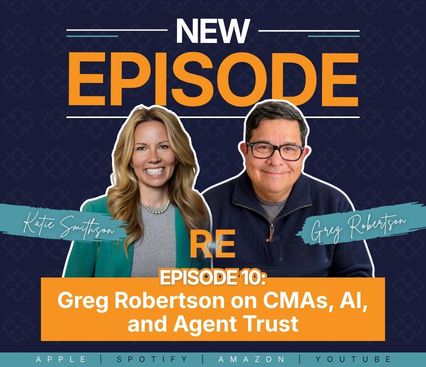
On REpod, host Katie Smithson and Greg explore why that shift is happening. Sellers now have Zillow, AVMs, ChatGPT, old neighborhood sales, and probably a number they already like. So what exactly is the agent bringing to the table that another valuation tool can’t?
Greg has a strong opinion about where CMA technology may be getting distracted. Better comps and faster reports sound useful, but he keeps coming back to a different problem: “It’s the persuasion… that is the factor.” And that raises a much bigger question about what a listing presentation is actually supposed to accomplish.
AI only makes that question more interesting. AI can help an agent do surprisingly well, but local knowledge, MLS data, and simple human observation still matter a lot. As Katie puts it: “AI can’t smell the cat or hear the dog barking.”
Here are the key takeaways:
(4:45) Why CMAs Are More Relevant
(5:30) Zillow Didn’t Kill the CMA
(7:38) The Pricing vs. Persuasion Problem
(10:21) Preparing for the Zillow Question
(11:54) Using AI Before the Listing Meeting
(15:01) AI, MLS Data, and Trust
(17:42 Why Three-Minute CMAs Fall Short
(22:52) Building Trust in Real Estate
(24:48) Candor, Mistakes, and Industry Commentary
So where should MLSs own the technology? Where are vendors better equipped to fill the gap? And as easier data access creates room for smaller, more specialized real estate tools, could collaboration become more important than either building or buying alone? Tune in as Katie and Brad put that build, buy, or partner question to the test.
About Greg Robertson
Greg Robertson is a longtime real estate technology entrepreneur, author, and industry commentator with more than three decades of experience. His work has included Cloud CMA, Vendor Alley, Listing Bits, and The Art of the CMA. His focus spans real estate technology, MLS data, agent tools, listing presentations, and the broader industry.
Connect with Greg:
About Katie Smithson
Katie Smithson is a long-time veteran of the real estate industry with a history of MLS relationship management and product innovation. In her most recent role, Katie was Chief Revenue Officer for California Regional MLS (CRMLS), directing revenue operations and ensuring proper communication and collaboration between all of CRMLS’s revenue-generating departments. In addition, she has also served as a NAR REACH mentor, board member for the Council of MLS with a CMLX 1 certification, and RESO Board Secretary.
Connect with Katie
Disclaimer
This podcast is for informational purposes only and features opinions, perspectives, and candid discussions about real estate technology and the broader industry. It is not intended as legal, financial, business, or other professional advice. Listeners should consult qualified professionals regarding their specific circumstances.
Listen to Other Streaming Platforms




Episode Transcript
Katie Smithson 0:00
89.6% of the respondents said CMAs will be more relevant in the future, and that’s up from 67% in 2020.
Greg Robertson 0:09
I thought when Zillow came out with this estimate, I thought, well, shit, the CMA is dead. Now it’s like, well, ChatGPT says my house is worth this much.
Katie Smithson 0:18
The Zillow can’t smell the cat. AI can’t smell the cat or hear the dog barking. AI can hallucinate, like you don’t know for sure where those sources are coming from. I’m sure you can go to your ChatGPT now and say, “I live at this address. What’s my house worth? It’ll give you a number. How can an agent effectively use AI in their listing presentation in their CMA? Welcome to RE Pod, the organized real estate podcast for the industry by the industry. This is where MLS leaders, association executives, and brokers come to rethink operations, simplify complexity, and build systems that actually work together.
Greg Robertson 1:25
Oh, look, Katie, how are you?
Katie Smithson 1:27
Doing well. Excited to have you here today.
Greg Robertson 1:31
I’m excited to be here.
Katie Smithson 1:33
We are going to talk a little bit about your new book. So, I think I want to start off just a little bit with some of the survey results, but before we get into that, I was just-I’ve got my prop too. But
Greg Robertson 1:47
all right, good. You got to put it on the back, yeah, up there, yeah. Yeah, it’s usually
Katie Smithson 1:52
on the bookshelf behind me, but I wanted to make sure it got prominently displayed here. So I guess I want to start with like a little bit of your methodology with writing your book because this is the second edition. You released the first in 2020, and I believe you went through a similar process where you actually surveyed agents about CMAs, how they’re creating them, all those things, and then wrote the book, and or something like that. I believe it was a similar process for this edition. Is that right?
Greg Robertson 2:24
No, absolutely. So back in, I released the first edition. I think it was August of 2020. So if you think about that time, I’d always wanted to write a book, and I thought something to do with the industry would be the first thing to do. I had an old buddy of mine that used to work with me in marketing over at E Neighborhoods named Charles Warnick, and I had this kind of dream. I’m going to do this myself. I’m going to be the blah blah blah, right? But Charles is such a great guy. Where he would just like, okay, well, let’s set up the schedule, deliver me these pages by this time, and he just really kept me on track. And then he would make suggestions, and he would just make everything a little bit better on it. So having a partner like that, I think I work best with a lot of you know having partners like that, just having people to work with to help me do it. So anyway, we did that, and part of it at WR Studios, we did a survey of all our cloud CMA subscribers of like you know best practices for doing CMAs and listing presentations, and we decided to put that in the back of the book, and then release the survey separately as well. So you know, it was that was six years ago, right? So when it came time, like there’s just stuff that you write, and like it just doesn’t age well. And there’s you know honestly, there’s a couple mistakes in the book that you know were typos and stuff that I wanted to like.
Katie Smithson 3:41
No, you had typos. I’m shocked, Greg.
Greg Robertson 3:43
You’re so funny, and so I got rid of those, and I I wrote a new chapter on AI because that’s obviously a thing, right? So yeah, was and then you know having the chance to do a survey. Lucky for me that I’ve got a still Dan and I’ve got a great relationship with the guys at Lone Wolf. They agreed to kind of help me with it because they had the agent list and everything else. So I think we got over like close to 2000 or 2200 people to respond, which was fantastic. And we asked the same questions, and then we added a couple more. Right. So that’s the thing that was cool was like seeing the difference in the questions that we already asked was to me interesting.
Katie Smithson 4:23
Yeah, and that was that’s one of the points I wanted to talk about right off the bat. So you did have I’m looking at my notes. You had 2165 U.S. real estate professionals that responded to the survey. Maybe some
Greg Robertson 4:37
Canadians are stuck in there, so we’ll maybe
Katie Smithson 4:40
okay. This did specify U.S. So, of those 89.6% of the respondents said CMAs will be more relevant in the future, and that’s up from 67% in 2020. So, I guess it’s interesting. Because you’d think that with the availability of information that is out there for consumers now, that maybe CMA would not be as important. But I guess, what do you think is behind that? Is there pressure for agents to actually prove their value? Is there just maybe a lack of confidence in the information that people are seeing online? What do you think caused that? I mean, that’s a pretty big jump.
Greg Robertson 5:30
Yeah, it was the biggest jump of the survey, right? It’s 22 points, right? So that was a huge jump. And no, I mean it was surprising, but I think at the at the same time, it’s one of those things that that makes sense in a way, right? I mean, I thought when Zillow came out with this estimate, I mean, you know, you and I worked together. I mean, this is a little bit earlier, but I mean, I thought, well, shit, the CMA is dead, right? I mean, it’s it’s gone now because Zillow put a price on every home, but that didn’t that didn’t happen, right? I mean, it was more of a really, I think it was almost the best gift you could give to a real estate agent because they could measure against something, and I think that’s all that’s happened now. As you know sold Cloud CMA before, and I’ve sold it for a long time, and you know we’d always say in our demos, it’s like at most listing presentations, there’s always one point when the seller says, “Well, Zillow says my house is worth this much, right? And every agent hates that. We had an answer for that in the in the in the app, but now it’s like, well, ChatGPT says, you know, my house, or Claude says my house is worth this much, or this AVM, or this whoever, right? I mean, or their brother that has some vibe-coded app says it’s worth this much. I mean, it’s like, so that’s why I think the CMA has become more relevant because an agent. I mean, and I think about there’s so fewer comps now too because you know the last three or four years we’ve had below 4 million transactions in the U.S. So these sellers are so anchored in, you know, whether it could be also that you know well that house sold for whatever. Well, that’s back when interest rates were 3% It was 2000, you know, 21. All this anchoring, pricing, market. That’s why a CMA to me is more relevant than ever because they’ve got to like walk in that listing presentation and have their stuff together, right, to be able to demonstrate to that seller. Like, listen, I know all the noise you’ve been listening to, and all this. They’ve got it. CMA to me personifies that agent’s kind of knowledge and builds that trust. And so, when you think about it, I did the same thing with you. Kind of a you know head fake, like what you know. But no, I think it makes sense. Yeah,
Katie Smithson 7:38
Yeah. Well, you you said obviously you brought up Zillow, and I think that’s one of the things that I want to dig a little bit more on because another piece of the survey was that 33.6% said that the seller did not agree with the agent on the list price, and then that was second only to 35.4% saying the seller went with another agent, and that was the reason that the listing agent lost that listing. So, do you think it’s not necessarily a data problem, but more of a persuasion problem?
Greg Robertson 8:16
Yeah, you nailed it. You nailed it. I mean, I think. I mean, this might be counterintuitive to people, but I mean, I’ll put it this way: when, when you know, since I’ve left Lone Wolf, and you know, not really a part of Cloud CMA directly anymore. I mean, I’ve had a lot of new vendors show up, like, “Oh, would you and Dan help me make another a new CMA? And like, it’s like, “Oh God, I can’t. It’s like, you know, those are my kids over there, I can’t like create a competition with them, right? But I see the allure of it, and I know that they’re not really on the right path when they give me a demo because I always want to get a demo. Hell, I mean, I’ll see what you got, right? But I can always tell they’ve made a mistake when they’re focusing too much on like this. Finds the best comps, or this has the best pricing out the room. I mean, any agent that’s really doing a good job already knows what that house is going to sell for. It’s the persuasion, as you say, it is the factor. So they need to do a better job. We need to create reports that do a better job of helping that agent make sure that they understand. Listen, don’t go to that agent that is just going to list it for whatever you want, because you’re gonna, you know, have to lower it anyway later, right? So that’s just gonna take a long time to do that. So, no, it absolutely is about persuasion, and that’s that’s a key factor. I think in like any any sort of any sort of presentation you’re doing, you have to come up with better ways of doing that. And that’s not only on like showing why you came up with that price, but also why you are you, and and like you know, and and really bolstering who you are as an agent to convince them for sure.
Katie Smithson 9:50
Yeah, yeah, and I think that goes along with too what you were saying about consumers. You know, oh well, Zillow says my home is worth. Whatever, what do you think the biggest mistake an agent makes in when they’re in a listing presentation? Let’s say that comes up. What mistake are they making to overcome that argument that maybe they lose the trust of that client because they aren’t answering in a way that really jives with the way the seller is thinking.
Greg Robertson 10:21
Yeah, you know, it’s it’s basic. It’s like they didn’t look up what Zillow said ahead of time. I mean, think about that, right? You’re going to go in that situation and like they don’t know what Zillow says about the home. They’re going to be faced with that question. They should be prepared for that. They should know the difference between, you know all the comps and that. I mean, good CMA programs kind of put that together for them, but I’m just shocked. Like they’re not really preparing well, and they don’t even know that. Same thing with like, these iBuyer offers. I think you know programs, you know companies like Open Door, they have agent. You know, you can work with agents. They work with agents, and you can find out what an instant offer would be on that too, because you know more than likely, maybe the seller has gone to Open Door or these other eye buyers and found out what it is. So, know all the information ahead of time. What is that like? You know, every courtroom scene or every movie with a lawyer is like, don’t ask a question you don’t know the answer to. Don’t know the answer to. Yeah, exactly. Yeah, same thing. Same thing. Absolutely.
Katie Smithson 11:18
Yeah, yeah, yeah. So I guess since you did bring up AI and that as part of the new chapter in your book, I think that adds another layer of complexity. Because to your point, like now it’s not just sellers going to Zillow to see what their home is worth; they’re asking ChatGPT or Claud or any of those. So how can an agent effectively use AI in their listing presentation in their CMA? And I think, you know, to your point, being prepared for what might come up around those conversations of what a seller saw it on
Greg Robertson 11:54
Yeah. I mean, so I mean, when you say how can an agent use AI, I mean it’s how can all of us use AI? I mean agents are, I mean, they’re using. Hopefully, the most successful agents are using AI in their business in a lot of different places, right? So it’s not just in the CMA. It could be, you know, marketing materials are creating to get that listing presentation, right? I mean, I think one of the best uses for, I don’t think AI’S, you know, again, it’s another algorithm that is coming up with a number. I think an agent gutly, you know, in their gut, know what that home is going to sell for. What, maybe in some sort of range? But I always tell the story. My mom was a real estate agent, and she used to say, “Oh, Mijo, I hope they don’t ask me about commission, or they don’t ask me to make the price high, and then, you know, whatever. And I’m like, “So you know what they’re going to ask you. Oh, they ask the same questions all the time, right? Well, why don’t you just like write a great script to answer that question, right? I mean, and I think AI is a perfect thing for that. Type into AI. I’m a real estate agent, and all the time when I go to a listing presentation, the seller says that they don’t want to pay all this commission. What should I say? Give me five examples, and then craft your own, and then practice that. I think it’s a wonderful use of AI. Another thing is, just like one of the things that came in the survey is that they they really wish the CMA would like give me a value for a bedroom. So if one is if the subject property has five and it has four, what should I add or subtract? You know, depending on the situation. Yeah. You know, I think of like I was talking about this before. What if you, like? And again, check your MLS for what type of rules they have using AI and MLS data. Some are more forward than others. Somehow restrictions, but check your MLS. But imagine, you know, taking that this neighborhood data from the last, let’s say, five years, and say, okay, there’s building. You know, there’s houses here that have finished basements and some that have unfinished basements. What’s a delta? That’s something you could do for sure with a spreadsheet and a download from you know a CSV file. And what is that going to take you? Five hours, and then great use of AI. You know, you just have it’ll do the math for you. Obviously, you want to confirm those results, so it’s not right.
Katie Smithson 14:11
Yeah
Greg Robertson 14:12
But I think that’s a great way of using AI. As far as you know, like maybe you can. How much is a bedroom worth in this neighborhood in the past five years? Right. I mean, there’s there’s some kind of interesting thing you can do that to like harness your your ability there. But as I said, I think those are really minutiae things. I think a lot of time, I mean, I think a good agent knows. I know that floor plan. I know that house. You know, Regina sold that two years ago, and the problem with that is, you know the dog barks next door, and that’s going to cause any buyer. I mean, they just know, right? So,
Katie Smithson 14:44
Right
Greg Robertson 14:44
Yeah
Katie Smithson 14:46
Yeah. There are things that AI is not going to be able to tell you. Just like your quote, I think it’s in the book, isn’t it? The Zillow can’t smell the cat. They can’t AI can’t smell the cat or hear the dog barking. Right,
Greg Robertson 14:59
exactly. Yeah, exactly. That’s right. Yeah.
Katie Smithson 15:01
Well, you also bring up obviously the interesting point of MLS data, and I think that’s the other important factor here in AI is. AI can hallucinate, especially if you’re using like chat and cloud. Like you don’t know for sure where those sources are coming from. Obviously, I think the industry is doing a lot to keep up with the demands of AI, but just, you know, an important thing to keep in mind that your MLS has a lot of valuable data in there. And to your point, like you can use the MLS to find properties that you need to support your argument, and AI can help you get that answer faster, but by having that those facts from the MLS, it makes it more defensible. Makes the response more defensible.
Greg Robertson 16:10
Yeah, I mean that’s the biggest. I mean, the biggest asset they have an agent has is access to MLS data. I mean, you know, when you type something, I mean, I’m sure you can go to your ChatGPT now and say, I live at this address. What’s my house worth? It’ll give you a number, and it’ll probably give you some data that it’s basically scraped off the web, right? To do that, but I mean, you don’t know how good that’s going to be, right? I mean, you have, as an agent, you have direct access to MLS data, which is the best data out there. So yeah, I mean, it’s it’s the biggest advantage they have For sure
Katie Smithson 16:41
Yeah. So let’s talk a little bit about how agents are actually presenting their CMA to their client and how they prepare. So, part of the survey, you did ask how far in advance they are preparing their CMA. So 47.9% of respondents create their CMA one or more days before the listing presentation, and that’s up from 35.3% in 2020. But at the same time, 75% of those agents are delivering the CMA at the time of the presentation. So, putting more effort into the preparation, but then waiting for the big reveal at the kitchen table. So, do agents not want to basically show all their cards ahead of time? Is it, are they relying more on the CMA to help with the overall presentation? What do you think, Paul?
Greg Robertson 17:43
Yeah, yeah, it’s it’s interesting. So, if you think about it, find out what your home is worth. Right, is like the oldest call to action in real estate marketing. I’m sure there was like Frodo the caveman and put that on a bunch vest. I know what you’re caving.
Katie Smithson 18:05
So I came along with a chisel and a ham or hammer
Greg Robertson 18:07
and like that. That’s just been the call to action of our life. Of like, and what is what is at the end of that call to action? It’s a CMA, right? I mean, that’s exactly. I mean, the most popular call to action in real estate, the most the the most popular marketing tactic in real estate, is basically at the other end of that providing a CMA. So I I mean I cringe when I I look on YouTube and I see these guys like make a CMA in three minutes, make a CMA in two seconds, make a CMA in in whatever. It’s like, I guess you can come up with a report that spits a number out, right? But I mean, as far as like how I perceive it is that you know it’s a job interview. You want to get the job interview. You want to like, okay, you’re asking for your home. Okay, here’s some information about the market, but every home is different. Let me sit down with you, and we’ll go over exactly what you know your house is going to be. I mean, give them an appetizer, and then set up a meeting to let them see who you are and what you’ve done to do that. And I guess there’s some cases where you know a buyer just give me a you know, or a seller’s like just give me a price right now. I mean, maybe you’ll run in those kind of situations. I would never. Well, I don’t know why I would do that as an agent. I would just try to like put that off and like make sure that they give me a full set of time to do it. I mean, to me, it’s like I always find these things with. I mean, you’ve been in these situations before with designers, right? With like, like let’s say logos or or things like that, where it’s like you know you hire a designer to make a logo, yeah, send me some logos, and they well okay, and then they want to walk you through well, you know this the the blue comes from the eyes of this, and they they tell a story, and like, and I’m like at one point I’m like oh my god what do I have to listen all this but you know what I’m always like. That was that’s cool. I love that, right? So yeah, you want the same type of thing, right? You want to understand the story. What’s the narrative behind this? I think that is going to be able to help you show off your skills. Again, it’s I think it’s a personification of the agent’s knowledge. It’s a way of building that trust, and I just don’t think doing a three minute CMA and then, you know, sending them a number is the right thing to do, right?
Katie Smithson 20:24
Right, right. Yeah, that’s not ultimately going to get the trust of the person you are trying to convince here to sell probably the largest asset they own for a particular price. And to your point, you really have to build that trust in order to get that listing and to ultimately work with that client. So
Greg Robertson 20:47
Yep.
Katie Smithson 20:49
I think that’s. I mean, is there any other points from your your book or from the surveys that you want to call out? Because I want to shift gears a little bit, unless you have any final thoughts on your book or anything?
Greg Robertson 21:03
No, I mean you can go to theart of the cma.com. You can download the survey and see that again. Thanks to a really good, just a shout out to Lone Wolf for helping that make happen. You can get the first chapter, or the I think the second chapter free as a download there too. So and we’ll have other goodies up there. We’re thinking about a CMA grader in the future. Some other stuff there, but um, you can go there and find out. And then you can order the book. If you order the book at theart of the cma.com, I’ll actually sign it for you. I mean, I was going to
Katie Smithson 21:35
ask if you sign because my copy is
Greg Robertson 21:38
Yeah, so I’ll cite it if you order it from there. Amazon, you just get it from Amazon. So I mean that’s its own thing, right? But yeah.
Katie Smithson 21:45
Okay. Well, we’ll put all that in the show notes so people can find you easily. So I do want to kind of obviously talk a little bit about your other ventures, and I think the trust topic is something I want to lean into because I think that in this industry you are an extremely trusted voice and you’ve obviously been around for many, many years and I guess that has led to obviously, like people enjoy your writing on Vendor Alley, they are buying your books they listen to your podcast, so I think I’m just curious. Like after doing this for years and years, talking to so many different people, how do you just continue to build that trust? How do you make these interviews that you do on like listing bits more conversational? And you know, it’s just it. It always feels everything. It feels organic with you. So I just, I don’t know. Talk a little bit about how you have your how you have your magic in this.
Greg Robertson 22:52
I don’t know about magic. I mean, I think one thing that Dan and I, my, you know business partner. I mean, we started our first company together in ’92. I mean, it’s just a persistence, right? We just didn’t give up. We were so stupid. I always did talk to us about, like we were just two drunks holding each other up in a bar, right? We just did not quit. I mean, we, you know, started one company, another. And like, what happens is when you’re, I’m not the smartest guy in the world, but when you’ve been doing the same exact thing for 35 years. I know that pretty well, right? The other thing is that I mean, there’s people like you and Francis and Chris and John and, you know, all these people that you know Damon and Shane, that are working in other facets of the industry. I just have, I mean, for the people that have worked for Dan and I since we started this. I mean, Damon, who’s now back at you. I mean, he was-he’s been doing this since you know, I think like 95, right? I mean, with us, you just have this network of people out there that you had a great time with, that you know you pass through, and that are out there, and like it’s just every time I go to a conference, it’s like some sort of mini reunion of what company we were working together. There’s that. There’s like just trying to do the right thing, right? Something my dad always taught me. I think I have somewhat of a permission from the industry that I can say things that people don’t want to say or can’t that they feel they can’t say, but they I got permission of that. I think that’s more of a privilege than a right, so I try not to abuse that. I prop you know people tell me I’ve become more gentler on on the.
Katie Smithson 24:37
I was gonna ask like, have you ever walked away from a conversation and been like, yeah, man, I should have gone a little harder on that and pushed a little bit more. Or do you feel like you are?
Greg Robertson 24:48
Yeah, there’s definitely articles I’ve written that I’ve erased. There’s definitely articles that somebody called me out on, and I think there’s one time I took it down because I didn’t really know something, and like that just kind of changed the whole. Narrative. No, I mean I’ve made mistakes, of course. I mean to me, what I try to do, and it’s hard, is like okay, I’ll take a news story, something about the industry, a link to that, I’ll kind of put a blurb of what I think the essence of that article is, and then I’ll try to write two or three sentences that will reveal something on there and make it kind of funny, right? Yeah, I’m not, you know, Rob, you know, my brother from another mother over at the industry relations. He’s the verbose type. He’s going to do 2000 words, right? And let’s let’s get into it. It just goes there. So it’s just different types of writing styles on that. I think another thing is humor. I’ve always been able to like, you know, break any sort of like tension with a little bit of a humor. That’s always served me very well, and I think people know I’m sincere about it, right? You know, I do care about the industry. I think it’s treating people right. I mean, you know, I’ve tried not to. I mean, again, I’m not perfect. I’m sure there’s somebody’s gonna go, you asshole. But
Katie Smithson 26:04
Well, you have made me cry multiple times.
Greg Robertson 26:07
Yeah, exactly.
Katie Smithson 26:09
Point that out.
Greg Robertson 26:10
Get the tissues out. Yeah, I made you cry all the way to the bank. Exactly.
Katie Smithson 26:16
Yes, you did. Well, I think that was-I don’t know. I mean, to me, your experience in the industry it really just kind of like personifies almost the way that agents are preparing for listing presentations. It’s like be prepared, know your like know your audience, be sincere, you know. Be yourself and find a way to like to connect with that seller, and you know, use the tools that you have to your advantage. Whether you know, maybe it’s humor, maybe it’s just like really heartfelt connectivity that you can do. Whatever the case might be, I think there’s real opportunity. It’s just kind of the art of sales, almost to just embrace those kind of attributes that make you who you are.
Greg Robertson 27:08
And the industry is great. I mean, there’s a lot of great people. I mean, it’s this traveling circus in a way, you know. We’ve for sure, and nobody ever leaves. It’s the Hotel California, right? I mean,
Katie Smithson 27:18
Yeah.
Greg Robertson 27:18
You know, we. It’s just it’s and when you’ve been doing it long enough, I mean I remember I mean, you know, you talk about REcore I mean Art Carter your CEO, I mean, we were in the same county, and you know he was like, I think the chief financial officer or bookkeeper over at a local association, and we would go to all I would go to all these associations with Art and I used to hang around in an El Trito bar waiting for the thing to be done. I mean, it’s just you know people for so long, right? Like now we’re like in a different place. Like, he’s CEO of the largest MLS in the world. I mean, good lord, right? I mean, it’s just it’s great to see people like you and others that I can see rise up and in different positions and really do great. So it’s it’s it’s fun to see. It’s fun to watch.
Katie Smithson 28:03
Yeah, yeah. Well, it has definitely been fun working with you over the years. I’m so glad that we get to continue to, you know, collaborate on different things together. And like I said, very happy that you agreed to hang out with me and and do this interview today. Before we wrap, obviously we talked to Amy a few episodes ago, and we talked about MLS Reset. Giant Steps is the other partner in that, so just want to remind everybody to get signed up for MLS Reset. Super excited about that. We’ll also put some information in the show notes there. And I do have a wrap-up question for you today. I’m going to try and start doing this at the end of all my episodes.
Greg Robertson 28:48
Am I the first one or second?
Katie Smithson 28:50
You are the first. You’re the first. So to wrap up, what is your drink of choice these days? It can be anything from like a specialty coffee or a cocktail, or whatever you’re just. What are you feeling these days?
Greg Robertson 29:05
Yeah, I mean, as you know, I’m a big gin drinker, and typically it’s tangerine. I get always different bottles of gin for gifts, right? So I have, I’m pretty well stocked with every type of gin you could have, and so like, it was always tangerine tonics, or tangerine soda, or you know, tangerine martinis. So now now I’m just I do a lot of Negronis. I had to figure out another way of ingesting gin, right? So it’s a little bit.
Katie Smithson 29:30
So you wanted a more complicated way
Greg Robertson 29:31
Little sweet vermouth and and then some gin and like you know somewhere I was reading it’s like it’s a great drink because it’s one ounce of each, so you could be, you know, kind of hammered and still make it, right? So one
Katie Smithson 29:46
Great takeaway. Well, next time somebody sees you at the lobby bar, they can get you a Negroni.
Greg Robertson 29:54
That’s right.
Katie Smithson 29:55
All right. Well, there is one more thing I’m going to mention here, just because. It is. I don’t know. I think one, you and I have always shared a special connection on music and artists and how deeply connected we can be to those. And today we lost the legend, Dolly Parton. So I just had to take a minute to honor that. I think you know. Again, just going back to kind of the things you were saying, like what your dad taught you, like do the right thing, and I think Dolly really embraced that. And I think just, you know, in a world where you can be anything, be like Dolly, be humanitarian, be kind. Yeah, when when we, I’m gonna wrap up for a cry. So Greg
Greg Robertson 30:43
I know, I know. It’s like I always, like to me like those are kind of old-school things. I remember last year when we opened up MLS Reset, I stole something from, I mean, Mister Rogers, right? And he always had a thing when he was speaking that he says, “Okay, I want to take like 10 seconds, and I want everybody in the audience a 10 seconds of silence to think about somebody that helped you be who you are, that loved you, that you know was a champion for you. And let’s just take 10 seconds, and I want you to think about them right now. And like I kind of wanted to do that. It was a huge, huge hit, and I could see some eyes well up in the audience. It was really,
Katie Smithson 31:26
I was in the back crying.
Greg Robertson 31:30
So get ready for that next year. Yeah.
Katie Smithson 31:32
Okay, great. Another recap of that. Well, thank you again for joining us. This was a great conversation. You are one of my favorite people in the world, so you’re one of mine. Appreciate you doing this. Thank this has just been a lot of fun. So, thanks for joining us, and thank you everyone for listening to another episode of Ari Pod. Get the art of the CMA.
Greg Robertson 31:56
Thanks, Katie.